
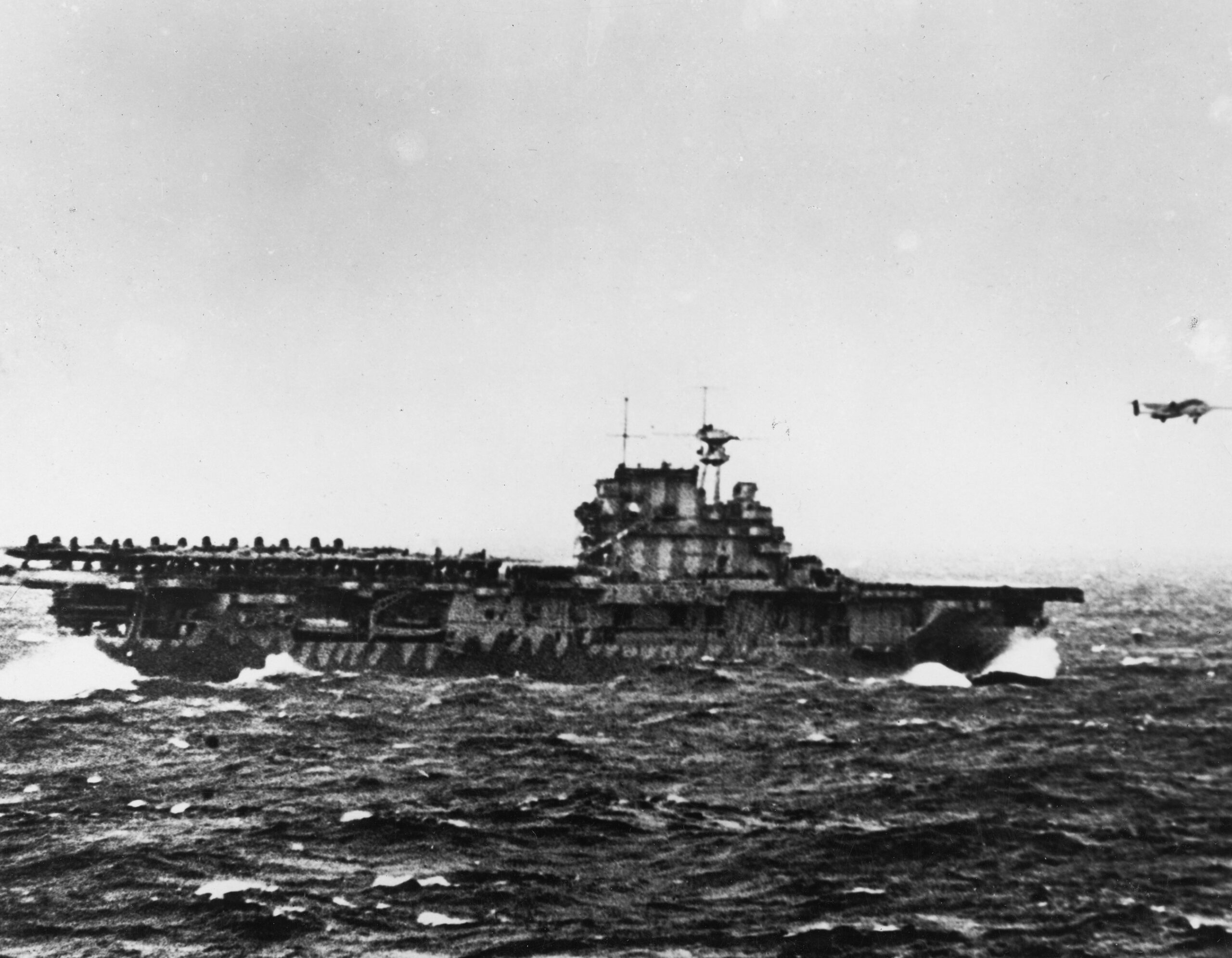
Cover image: U.S. Navy photograph 80-G-41197: a B-25 launching from USS Hornet during the Doolittle Raid, April 18, 1942 (U.S. public domain). Source and rights record.

1. Strategic Snapshot
On April 18, 1942, sixteen U.S. Army B-25 Mitchell bombers launched from the aircraft carrier USS Hornet and struck targets across Japan.
The raid caused limited physical damage. Roughly 14 tons of bombs were dropped on targets in Tokyo, Yokohama, Yokosuka, Nagoya, Osaka, and Kobe. Approximately 50 Japanese people were killed, 400 injured, and around 100 buildings damaged.
Measured strictly as a bombing operation, the results were modest.
Strategically, however, the Doolittle Raid had consequences far beyond the damage inflicted. It demonstrated that the Japanese homeland was vulnerable to attack, provided an important psychological boost to the United States after Pearl Harbor, and influenced Japanese military planning in the weeks that followed.
The raid became an early example of how a military operation can produce effects far greater than its immediate tactical results.
2. Three Key Takeaways
1. Tactical results do not always determine strategic significance.
The Doolittle Raid destroyed relatively little of Japan's military capacity. Its importance came instead from the psychological and strategic effects it created. Japan had expected its homeland to remain largely secure from American attack. The raid challenged that assumption.
2. Innovation can overcome major operational constraints.
The B-25 was never designed to launch from an aircraft carrier. Engineers and aircrews modified the aircraft for extended range, removed equipment, added fuel capacity, and trained extensively for extremely short takeoffs. The operation demonstrated how existing capabilities could be adapted to solve an unprecedented problem.
3. The consequences extended far beyond the original mission.
The raid contributed to Japanese concerns about homeland defense and became part of the strategic chain of events leading toward the Battle of Midway. It also triggered severe Japanese reprisals against Chinese civilians who had assisted downed American airmen.
3. Why It Matters
The Doolittle Raid is significant because it illustrates the difference between physical destruction and strategic effect.
The United States needed a response to Pearl Harbor, but conventional options were limited. The Japanese fleet controlled much of the western Pacific, and American forces were still recovering from the December 1941 attack.
The solution was unconventional: launch Army bombers from a Navy aircraft carrier, strike Japan, and then continue toward China.
The plan was extraordinarily risky. The bombers had to launch hundreds of miles earlier than expected after the task force encountered Japanese patrol vessels. The crews then faced long flights over the Pacific with limited fuel and uncertain weather conditions.
All sixteen aircraft were ultimately lost.
Yet the operation achieved its broader purpose. It demonstrated that Japan could be reached, challenged Japanese assumptions about homeland security, and provided the United States with a badly needed psychological victory only months after Pearl Harbor.
The raid also illustrates the importance of second-order effects. Japanese leaders responded by strengthening homeland defenses and seeking to eliminate the perceived threat from American carriers. Those decisions contributed to the broader strategic environment surrounding Midway.
At the same time, the raid carried a devastating human cost beyond the American crews. Japanese forces launched reprisals in areas of China where local populations had assisted the airmen. The consequences demonstrate that strategic decisions can produce effects far beyond the battlefield where an operation begins.
4. Read The Full Article
The Doolittle Raid: How a Military Stunt Reshaped the Pacific War
The accompanying article takes a deeper look at the planning, execution, and consequences of the raid.
It examines the technological improvisation behind the mission, the decisions that forced the crews to launch early, the fate of the raiders, Japanese reprisals in China, and the raid's connection to the strategic developments that culminated in the Battle of Midway.
Read the full article for a deeper analysis of one of the Pacific War's most consequential early operations.
5. Recommended Resources
James M. Scott — Target Tokyo: Jimmy Doolittle and the Raid That Avenged Pearl Harbor
James M. Scott's Target Tokyo provides an extensive account of the planning, preparation, execution, and aftermath of the Doolittle Raid.
For readers interested in the operational details behind the mission, the book provides additional context on the people, aircraft, intelligence, and decisions that made the raid possible.
Recommended for: readers interested in military history, strategic decision-making, aviation, and the early Pacific War.
More briefs coming soon, stay sharp.