
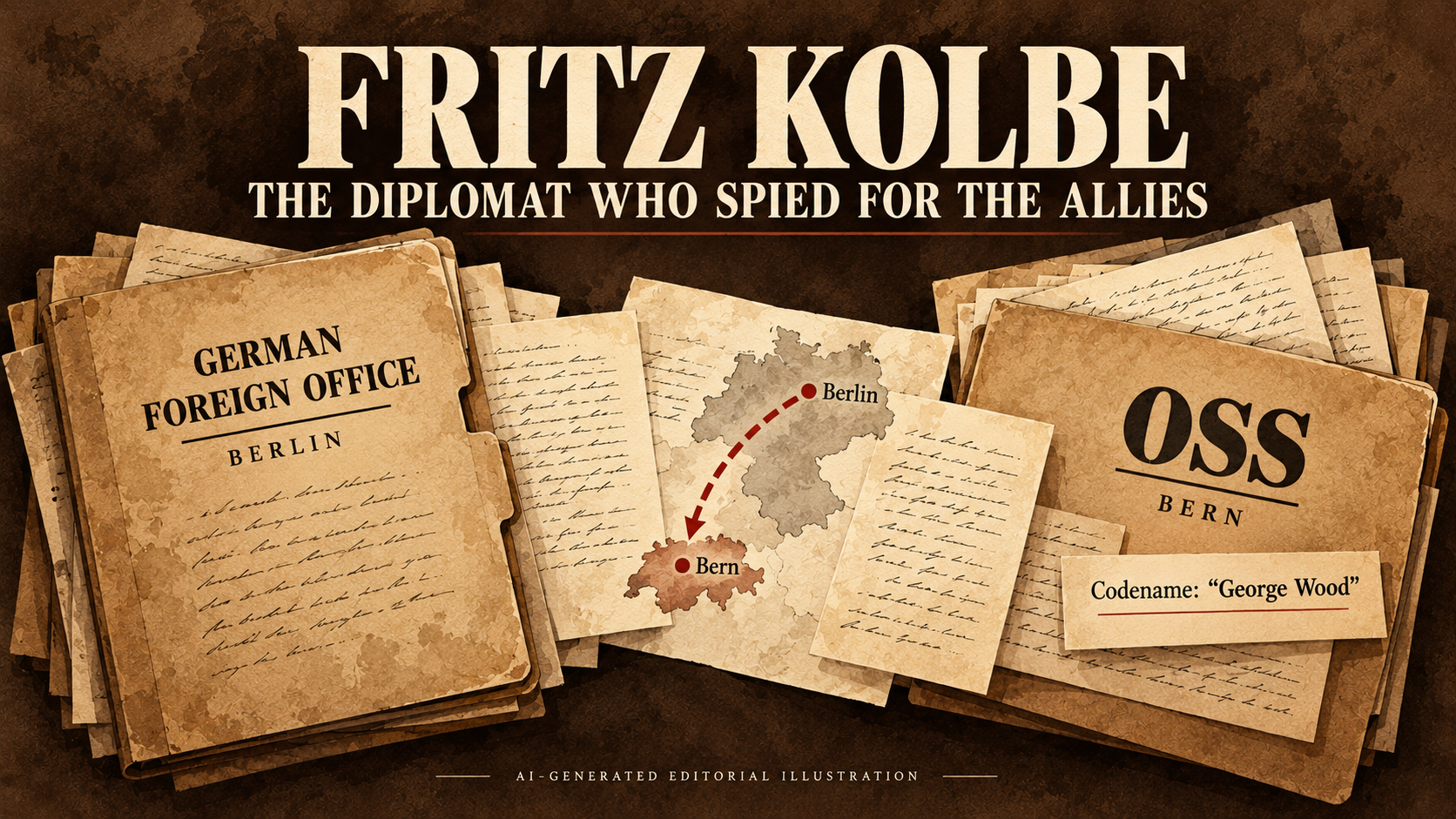
AI-generated editorial illustration depicting World War II intelligence correspondence associated with the Fritz Kolbe story. Documents, markings, and arrangement are illustrative, not reproductions of authentic archival records.
1. Strategic Snapshot
During World War II, some of the Allies’ most valuable intelligence came not from the battlefield, but from inside the German government.
Fritz Kolbe, a German Foreign Office official opposed to the Nazi regime, secretly provided American intelligence with a remarkable volume of classified German documents. Operating under the OSS codename “George Wood,” Kolbe passed information on German military planning, diplomatic activity, intelligence networks, weapons programs, and Japanese operations.
His story demonstrates the strategic value—and extraordinary risk—of reliable insider intelligence.
2. Three Key Takeaways
1. Access can be more valuable than technology.
Kolbe’s position inside the German Foreign Office gave him access to information that would have been extremely difficult for an outside intelligence service to obtain.
2. Intelligence must earn trust.
American intelligence officers initially had reasons to question Kolbe’s reporting. His information gained credibility as it was repeatedly checked against other intelligence and events.
3. Important intelligence can remain hidden for decades.
Much of Kolbe’s story remained classified long after the war. The broader historical record only became clearer after intelligence records were declassified.
3. Why It Matters
Kolbe’s experience offers a broader lesson about intelligence: information is most useful when it reveals how an adversary actually thinks, plans, and communicates.
His reports provided insight into German expectations surrounding the Allied invasion, weapons development, diplomatic operations, and international intelligence activity.
The story also highlights the human element of intelligence. Kolbe’s motivation was tied to his opposition to the Nazi regime, while his cooperation exposed him and others to enormous personal risk.
5. Read The Full Intelligence Brief
Fritz Kolbe: The German Diplomat Who Became America’s Most Important World War II Spy
The full article examines Kolbe’s recruitment, intelligence operations, relationship with Allen Dulles, wartime reporting, and the decades-long delay in public recognition.
6. Recommended Resource
CIA — “Alias George Wood”
The CIA’s historical material on Kolbe provides an excellent primary-source perspective on his intelligence work and the significance of the information he supplied.
More briefs coming soon, stay sharp.