
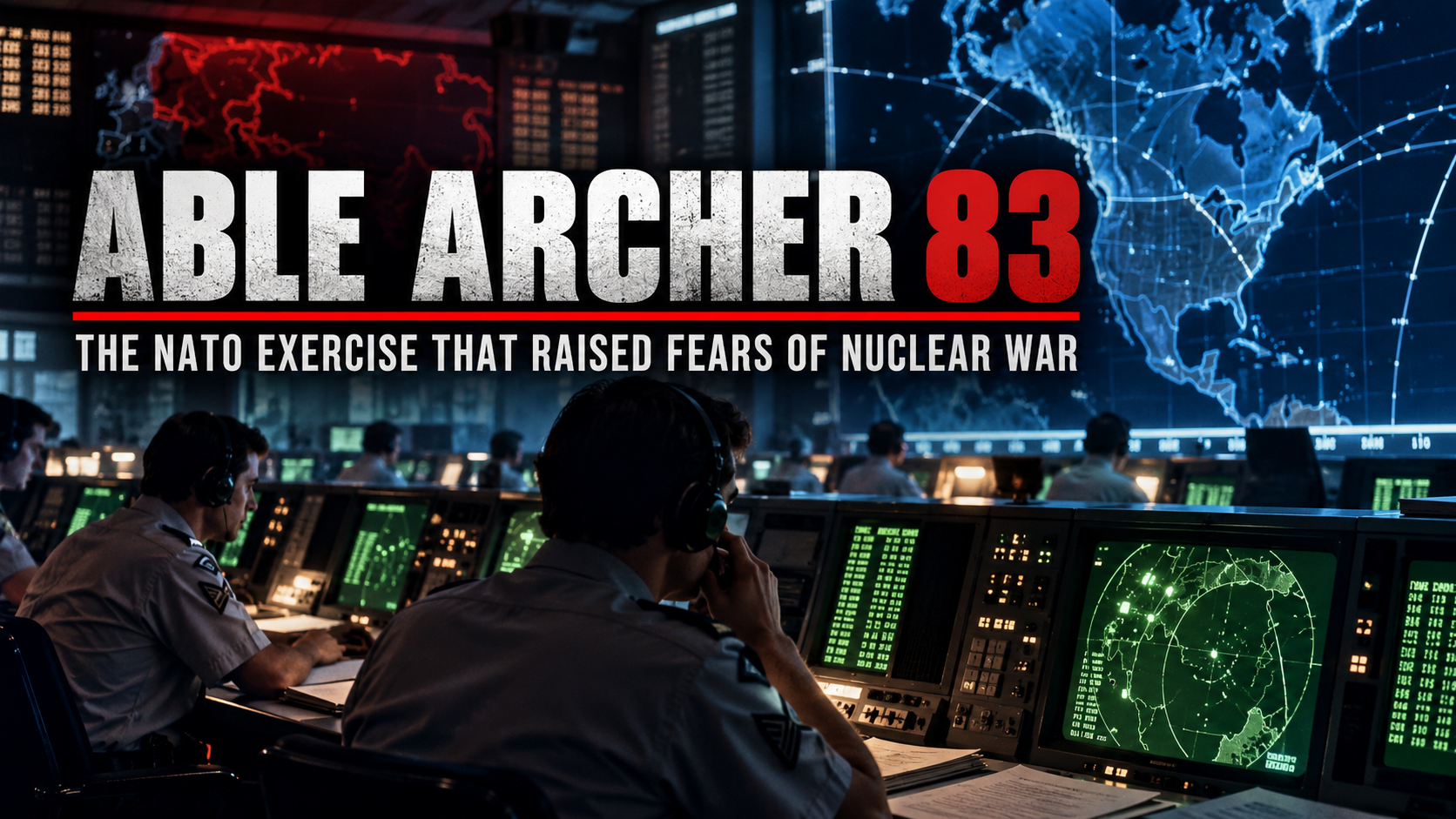
Cover image: AI-generated editorial illustration created for The Strategic Current (2026). It is not an archival photograph or a verified depiction of a 1983 command center. AI and editorial technology disclosure.
Able Archer 83: What the Nuclear Scare Evidence Really Says
Strategic Snapshot
A later U.S. presidential intelligence advisory board inquiry described intensified Soviet intelligence collection and elevated readiness among selected Soviet air units. It warned that Western analysts might have underestimated Moscow’s fears. But a May 1984 U.S. intelligence estimate reached a substantially less alarming conclusion: Soviet leaders were not judged to perceive an imminent war, despite unusual military activity.
Those assessments answer different questions and were written with different information. The later inquiry identified a potentially dangerous misreading; the earlier estimate shows what analysts concluded nearer the time. Neither offers a complete record of Soviet leadership deliberations. A documented alert is not the same as a verified decision to launch nuclear weapons.
Three Key Takeaways
- Alerts are not launch decisions. The record documents heightened readiness among selected Soviet units, but not a verified Soviet decision to initiate nuclear war.
- Intelligence assessments can disagree. The May 1984 estimate and later presidential advisory-board inquiry reached different judgments about the danger.
- Exercises carry strategic signals. Routine military procedures can be interpreted differently by an adversary already expecting confrontation.
Why It Matters
This distinction is the point of the story. Military exercises communicate to an adversary whether their planners intend them to or not. Intelligence agencies can observe a readiness change without knowing what leaders believe. And historians can examine the same crisis with different evidentiary thresholds.
The strategic lesson: nuclear stability depends partly on the ability to distinguish training from attack preparations, observation from inference, and anxiety from operational intent. Able Archer remains an important warning about escalation risk—not proof that nuclear war was minutes away.
Read the Full Article
Able Archer 83: What the Nuclear Scare Evidence Actually Shows
The full analysis examines NATO’s exercise, Soviet responses, and the competing interpretations of declassified intelligence.
Recommended Resource
U.S. Department of State, Foreign Relations of the United States — Special National Intelligence Estimate (May 18, 1984).
More briefs coming soon, stay sharp.
Read more at The Strategic Current and follow The Strategic Current across all platforms.